Rebuilding on Uncertain Ground: Land Tenure Insecurity and Economic Recovery in Post-War Gaza
Bashar M. Skaik1* and Kanan M. Al-Sourani2
1 Independent Consultant (Economic Development & Political Economy), Gaza, Palestine
2 Attorney-at-Law, Legal Consultant & Legal Activist; Expert in HLP Rights, Dispute Resolution & Access to Justice Gaza, Palestine
Corresponding author: Bashar M. Skaik — bashar@economicadvisoryhub.com
Abstract
Land tenure insecurity remains a persistent, yet often overlooked, barrier to post-war economic recovery. This study examines how fragile housing, land, and property (HLP) rights shape reconstruction and market revival in conflict-affected cities, focusing on the Gaza Strip and comparative insights from Bosnia and Herzegovina, Iraq, Syria, Liberia, and Rwanda. It analyzes how insecure tenure slows rebuilding, discourages investment, depresses property values, and complicates compensation programs for conflict-affected households.
Using a comparative political economy framework, this study draws on secondary sources from the United Nations, World Bank, and peer-reviewed research. It recognizes that tenure insecurity functions within a broader network of forces, including political fragmentation, infrastructure destruction, and external aid dependency, and interacts with, rather than solely causes, post-war economic decline. The findings highlight that secure and inclusive land governance systems are essential foundations for long-term urban recovery and resilience. The paper concludes with policy recommendations that integrate tenure reform into broader reconstruction and economic-development strategies.
1. Introduction
Post-conflict urban reconstruction extends far beyond physically rebuilding infrastructure. It involves reestablishing property rights, restoring livelihoods, and rebuilding trust between citizens and institutions. In fragile or contested territories, the absence of secure tenure undermines these goals. When land rights are uncertain, families hesitate to rebuild, investors withdraw, and reconstruction slows down.
These tenure frictions interact with a sharp macroeconomic contraction and deepening poverty resulting from the war. They also operate within a wider ecology of structural violence and economic oppression that shapes household coping strategies, investment horizons, and willingness to engage with formal systems.1
As the later sections show, this fragmentation interacts with other structural pressures — the blockade, widespread infrastructure destruction, and donor-driven rebuilding mechanisms — to shape Gaza’s recovery outcomes.
Similar patterns appear across post-war contexts globally. In Bosnia and Herzegovina, the Commission for Real Property Claims (CRPC) has processed over 300,000 cases, accelerating restitution and market revival. In contrast, Syria’s Law No. 10 (2018) heightened risks of dispossession by imposing proof and deadline requirements that many displaced owners could not meet. Together, these cases reveal that secure tenure supports, but does not single-handedly, determine economic recovery.
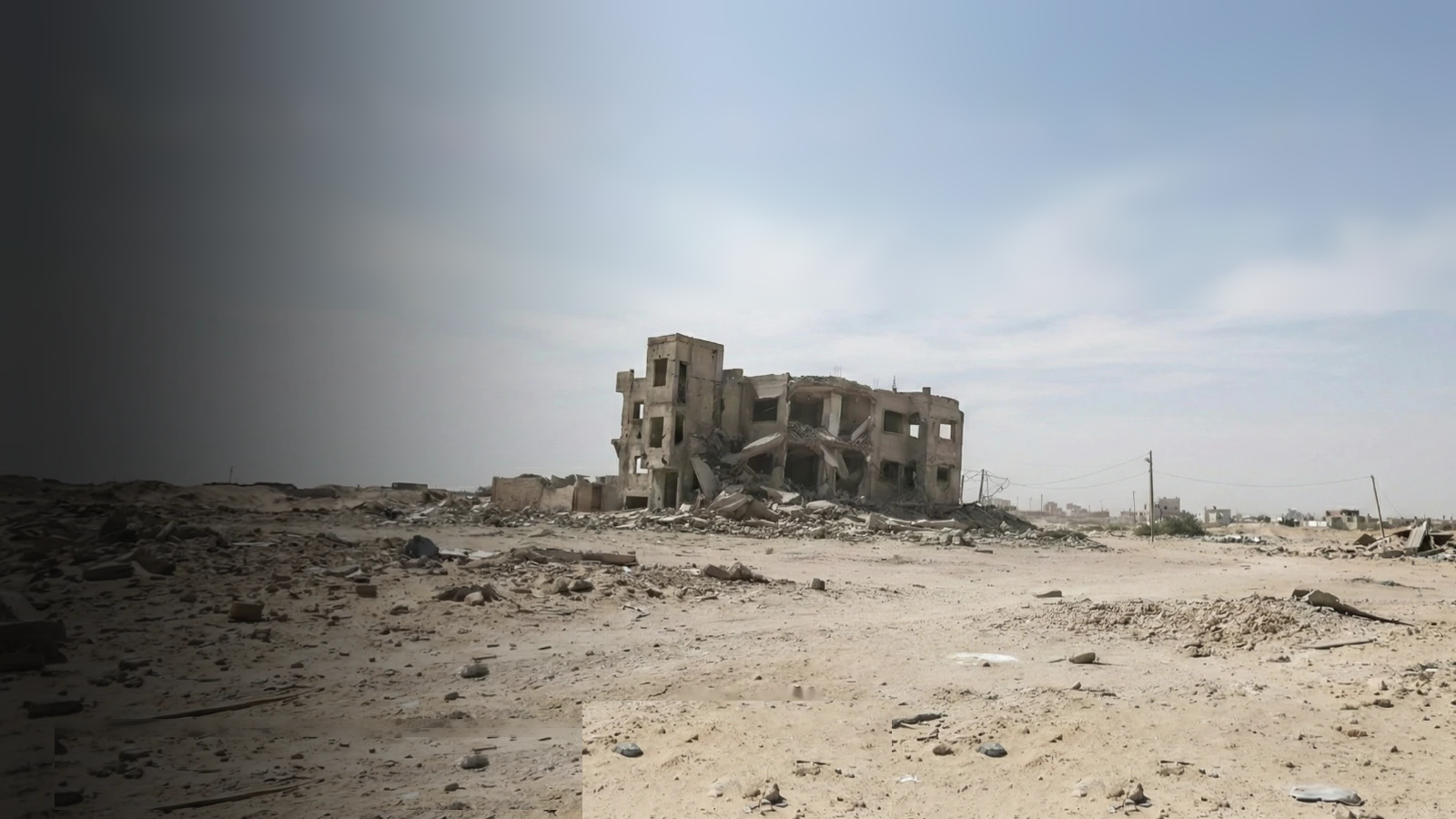
In Gaza, repeated cycles of destruction have devastated housing and critical infrastructure. Sector reporting indicates large cumulative housing damage since 2014, with additional damage recorded during subsequent escalations, including May 2021. Recent remote-sensing analyses corroborate the breadth and spatial concentration of damage, offering an independent quantitative baseline for reconstruction planning.2 Beyond physical loss, each conflict deepens tenure ambiguity and erodes confidence in property documentation. Tenure insecurity, combined with restricted movement, scarce resources, and fragmented governance, continues to hinder both reconstruction and investment.
This study places Gaza’s experience within a wider comparative framework. It asks the following questions: How does land tenure insecurity influence post-conflict economic performance, and what institutional arrangements can lessen its impact? Drawing on evidence from multiple cases, it identifies recurring links between tenure security, rapid reconstruction, better credit access, and inclusive redevelopment. While the analysis underscores the importance of tenure, it also recognizes that outcomes are shaped by the interaction of political, economic, and humanitarian forces, not by tenure alone.
2. Literature Review
Scholars have long debated how land tenure security shapes post-conflict recovery, approaching the issue from economics, urban planning, political science, and law. Despite their different perspectives, most agree that secure tenure is fundamental to rebuilding markets and social trust once violence ends.
In economics, Deininger3 and Feder and Nishio4 demonstrate that clearer property rights can stimulate investment and expand access to credit. Field5 and Besley6 further show that stronger tenure security can raise productivity and collateral value, underscoring the role of tenure in capital formation. In conflict-affected settings, however, these effects depend on institutional capacity and political legitimacy, and often require interim and fit-for-purpose administrative measures before comprehensive titling becomes feasible7.
Urban and political economy research highlights that tenure insecurity rarely acts alone. It interacts with displacement, weak governance, corruption, and donor priorities, shaping how reconstruction unfolds and who benefits. Post-conflict land administration guidance emphasizes that wars commonly destroy registries and displace populations, producing overlapping claims that must be managed through temporary documentation, transparent adjudication, and accessible dispute-resolution mechanisms8. Comparative governance assessments also show that political commitment, transparency, and participation are decisive for converting formal rules into effective tenure security9.
Recent empirical syntheses help clarify what changes when tenure security improves. A systematic review of land and property rights interventions finds generally positive but heterogeneous effects on investment and productivity, with results contingent on political economy, implementation quality, and complementary services. A review focused specifically on land registration and agricultural productivity reinforces this point: formalization can increase productivity through improved investment incentives and input access, but the magnitude depends on the credibility, accessibility, and enforceability of the registration process.10 A broader evidence synthesis linking tenure interventions to human well-being and environmental outcomes similarly reports mixed results and emphasizes that impacts depend on which rights are strengthened, for whom, and through what enforcement and dispute-resolution pathways11.
Importantly, perceived insecurity can impose large economic costs even where formal rules appear stable: survey evidence shows that fear of future disputes reduces investment incentives and can depress productive use12. These findings justify an analytical distinction used throughout this paper: Gaza's constraint is not only incomplete formal registration, but also a credibility problem - whether households, firms, and implementers believe that claims will be recognized and enforceable during reconstruction. Even outside active warfare, insecurity can be politically manufactured or strategically leveraged; evidence from peri-urban Zimbabwe illustrates how threatened tenure and contested authority can drive defensive behavior and informal bargaining that distort land allocation13.
Within the Palestinian context, Gaza-specific analysis highlights how ambiguous tenure and fragmented records can become a binding reconstruction constraint. Norwegian Refugee Council documents extensive documentation gaps and the administrative challenge of reconciling competing claims, and notes that these contemporary documentation frictions are historically conditioned by earlier legal-administrative dispossession and reclassification processes that continue to shape what counts as proof and whose claims are recognized.14 This aligns with the Global Land Tool Network’s Palestine land-governance review, which notes persistent informality and significant shares of unregistered private land and camp-based tenure complexities.15 These dynamics not only delay housing reconstruction through ownership disputes, but also increase transaction costs by necessitating legal mediation and discouraging private-sector participation in rebuilding. See Appendix B for a consolidated snapshot of Gaza-specific constraints relevant to tenure and reconstruction.
3. Analytical Framework
This study uses a comparative political-economy framework to connect legal and institutional analyses with indicators of economic recovery. It assumes that post-conflict reconstruction outcomes depend on how the three dimensions interact:
This framework is structured around three dimensions:
- Institutional context: governance structures, legal pluralism, and enforcement capacity.
- Economic incentives: credit access, investment climate, and property-market performance.
- Social inclusion mechanisms: recognition of informal rights, gender equality, and restitution for displaced populations.
This framework treats tenure insecurity not as a single cause of economic stagnation but as part of a wider system of constraints on economic growth. It contributes to and amplifies other factors, such as political fragmentation, weak coordination among donors, and the physical destruction of infrastructure. By situating Gaza within this broader comparative lens, the analysis illustrates how tenure reform can simultaneously operate as a development strategy and a tool for social reconciliation.
3.1 Legal and Institutional Architecture of HLP Rights
For reconstruction to translate into durable economic recovery, housing, land, and property (HLP) rights must operate as enforceable economic infrastructure, not merely as legal formality. In post-war settings, HLP rights determine whether damaged assets can be rebuilt, whether new construction can be sited and financed, and whether compensation can be targeted without triggering a second wave of contestation. Tenure security is produced by an architecture of rules (what rights exist and what counts as proof), institutions (which bodies record, adjudicate, plan, and pay), and enforcement pathways (how decisions are implemented). In Gaza, this architecture is stressed by displacement, record loss, overlapping legal traditions, and disrupted governance. Strengthening it is therefore not "legal housekeeping"; it is a macro-micro coordination problem that shapes investment incentives, property values, labor mobility, and the feasibility of reconstruction at scale.
Rules define the universe of legitimate claims and the evidentiary threshold for recognition. In Gaza, rights sit on a continuum, from formally registered ownership to family-based claims to long-term occupancy, rental, and other use rights that are economically real but weakly documented. A reconstruction system that recognizes only the fully formal end of this continuum will exclude large segments of rights-holders and invite rent seeking. A practical alternative is a tiered evidence ladder: recognize claims using the best available evidence (registry extracts where available, tax and utility records, municipal archives, building permits, neighbor attestations, and community mapping), assign a confidence level, and then upgrade the record over time. This approach aligns with fit-for-purpose land administration, which favors coverage, inclusivity, and usability under constrained capacity rather than perfection at the outset16.
Institutions translate rules into decisions and, ultimately, into predictable behavior. Three nodes matter most: (i) land administration functions that record and update rights (registries, cadastral services, municipal archives, and digitization units); (ii) adjudication and dispute-resolution bodies that can resolve overlapping claims at scale (courts, special tribunals, mediation panels, and administrative appeals); and (iii) planning and permitting authorities that link tenure to land-use change, infrastructure siting, and rebuilding approvals. If these nodes are fragmented or captured, the economic consequences appear quickly: transactions slow, disputes multiply, and reconstruction finance becomes riskier because lenders and contractors cannot rely on clear decision authority.
A practical weakness in this institutional chain is the continued reliance on document-intensive, non-interoperable workflows. Even routine life-cycle events that should update rights predictably—most notably death and inheritance—may require heirs to manually assemble paper certificates from multiple bodies (e.g., Sharia court inheritance documentation, civil status records) and then re-present them to the Land Registry (Tabu) and municipal entities to effect a transfer. Because updates are not reliably propagated across agencies through an integrated system, verification costs rise, delays become routine, and the space for dispute-making expands. In a reconstruction phase, these frictions are likely to multiply as claim volumes increase and institutions operate under constrained capacity.
Enforcement pathways are the credibility layer. Rights that cannot be enforced are not collateralizable and rarely investable. Enforcement in post-war cities includes not only court judgments, but also administrative enforceability: the ability to issue and honor occupancy certificates, prevent opportunistic eviction, register inheritance transfers, and implement restitution or compensation decisions. This is the channel through which tenure insecurity becomes an economic mechanism. If households believe that claims will be overturned, they defer rebuilding; if firms cannot predict whether land access will persist, they under-invest; and if implementers cannot enforce eligibility decisions, aid and compensation systems are exposed to fraud and political bargaining.
Comparative experience suggests that sequencing is often superior to an all-at-once titling ambition. Land titling programs frequently under-deliver when implemented as a standalone silver bullet, especially where institutions are weak and disputes are pervasive17. By contrast, rights-at-scale initiatives demonstrate that rapid, low-cost documentation can secure broad coverage quickly, and that systems can be upgraded over time as institutional capacity returns18. In post-conflict settings, the objective is to stabilize expectations: first, record and protect occupancy and use claims; second, provide scalable dispute triage and accessible remedies; third, progressively upgrade records and align planning and permitting with recorded rights. This sequencing is consistent with lessons from post-conflict land governance that emphasize dispute resolution, institutional legitimacy, and the risks of premature formalization19.
Inclusion is a binding constraint within the HLP architecture. Documentation and inheritance regimes can reproduce gender and household power asymmetries when marital property, caregiving, and household composition are not reflected in evidentiary standards. Women may hold socially recognized rights that are not recorded in their names, or may be disadvantaged by proof requirements that assume the presence of male relatives or formal inheritance documentation20. Reparations scholarship similarly shows that compensation frameworks can unintentionally exclude women unless eligibility rules and evidentiary standards are explicitly gender-aware21. In practice, this implies joint-registration presumptions where appropriate, acceptance of alternative proof, targeted outreach, and legal aid mechanisms that convert social recognition into administratively usable records.
Viewed through an economic lens, the HLP architecture is a mechanism for lowering transaction costs and risk premia in a devastated urban economy. The immediate objective is credibility: make claims sufficiently legible and enforceable that households can rebuild, firms can invest, and implementers can deliver at scale. The medium-term objective is consolidation: progressively upgrade records, harmonize mandates, and align planning with rights recognition so that reconstruction does not generate new dispossession or deepen inequality. For Gaza, this subsection therefore frames HLP reform as an enabling condition for the investment, compensation, and infrastructure mechanisms analyzed in later sections.
4. Housing Reconstruction and Tenure Security
Housing reconstruction is the most visible expression of post-conflict recovery, yet it is also among the most affected by tenure-related barriers to housing. In Gaza, overlapping legal frameworks and fragmented governance have slowed rebuilding, complicated ownership verification, and constrained compensation efforts.
Successive escalations have caused substantial cumulative housing damage since 2014, with additional damage recorded during the May 2021 escalation22. Beyond the aggregate figures, repeated shocks leave families navigating destroyed homes, lost deeds, and competing claims. For households on the ground, tenure uncertainty often determines whether they can receive aid or even begin repairs.
Donor frameworks, such as the Gaza Reconstruction Mechanism (GRM), have been essential in channeling resources and oversight, but their heavy documentation requirements frequently slow implementation. Gaza-focused empirical work on post-disaster housing reconstruction likewise flags documentation and ownership verification as recurring bottlenecks alongside material constraints and coordination gaps.23 Because eligibility depends on formal deeds, many informal settlers, tenants, and women without inheritance documentation are excluded. In practice, the safeguards intended to ensure accountability can unintentionally penalize the most vulnerable. The Ministry of Public Works and Housing24 has acknowledged these limits but continues to face jurisdictional overlap and resource shortages that restrict reforms.
Experiences elsewhere highlight what inclusive systems can accomplish. In Bosnia and Herzegovina, the Commission for Real Property Claims (CRPC) restored confidence through a transparent claims process that resolved over 300,000 cases within seven years25. In contrast, Syria’s Law No. 10 (2018) institutionalized dispossession by demanding proof of ownership within short deadlines, effectively disqualifying displaced people26. Liberia’s Land Rights Act (2018) offers a more participatory example by recognizing customary and collective rights and helping communities reintegrate.
In Gaza, these global lessons underline that clarity and inclusion are prerequisites for large-scale reconstructions. However, tenure insecurity does not act in isolation; it interacts with blockade restrictions, limited resources, and political division. Lasting progress will therefore require not only technical reforms but also broader political and economic stabilization so that rebuilding becomes possible for all residents, not just those with the perfect paperwork.
5. Business Investment and Private Sector Revitalization
Post-conflict recovery depends heavily on the reactivation of private investment and employment generation. Secure property rights form the foundation of any functioning business environment; however, in Gaza, tenure insecurity compounds other long-standing barriers, such as political instability, restricted trade, and capital flight.
Small and medium enterprises (SMEs) struggle to obtain credit because banks require collateral with a verified ownership. Many entrepreneurs, especially those operating informally or in areas with contested titles, cannot provide such guarantees. Consequently, investment remains concentrated among a few established firms, while potential new entrants are excluded. Tenure insecurity, compounded by credit market constraints and political risks, significantly deters business investment and access to loans.
Unclear ownership also discourages external investors. Inconsistent cadastral records, unresolved disputes, and the absence of a unified property registry undermine confidence in long-term leases and factory construction. Similar challenges have appeared in post-conflict Iraq, where overlapping claims and compensation delays have weakened investor trust27. However, in Bosnia, post-war investment surged after the CRPC restored ownership rights through a transparent restitution framework.
Revitalizing Gaza’s private sector will therefore require more than just reconstruction and liquidity support. Legal reforms that guarantee predictable and transparent property rights are essential. Without them, even large donor capital injections may offer only short-term relief instead of sustained economic renewal.
6. Property Values and Market Function
Land and property markets are particularly sensitive to the clarity of tenure. Insecure tenure conditions depress property values by increasing perceived risk and constraining the use of land as collateral. In Gaza, the prevalence of informal transactions and unregistered holdings distorts valuation mechanisms and reduces the fiscal base of municipal revenue.
In Gaza, the challenge is less a wholesale absence of a cadastral framework than a collapse in access, verifiability, and enforceability under war conditions. Even where parcels were historically registered, mass displacement, partial destruction of records, the physical erasure of boundary markers, inheritance fragmentation, informal subdivisions, and interruptions to municipal and judicial functions can convert formally recorded rights into practically contestable claims. This raises transaction costs, delays reconstruction approvals, and expands the space for opportunistic dispute-making. In Syria, by contrast, post-war tenure insecurity has been compounded by a larger structural share of land outside effective formal recognition and by politicized property interventions—producing inflated transaction costs, legal disputes, and speculative trading28. Across both settings, suppressed property values are not driven by tenure insecurity alone; they also reflect broader market distortions such as speculation, elite capture, and governance weaknesses.29
Comparative cases reinforce the importance of this institutional coherence. In Rwanda, systematic land titling after 1994 rapidly stabilized prices, increased rural investment, and strengthened gender equity. However, in Liberia, competing customary and statutory systems produced overlapping claims and reduced investor confidence until the 2018 Land Rights Act introduced clearer demarcations. Gaza’s experience falls closer to the latter: multiple authorities, weak enforcement, and donor dependency create an environment in which market forces alone cannot correct distortions.
While tenure reform can enhance property market efficiency, its effects remain limited unless accompanied by transparent valuation standards, judicial integrity, and improved credit systems. Strengthening cadastral institutions would not only reduce disputes but also expand the fiscal capacity of local governments through more accurate property taxes.
7. Infrastructure Development and Urban Planning
Urban reconstruction and infrastructure planning are expected to be deeply intertwined with land tenure arrangements. Where ownership and use rights cannot be verified quickly, project siting, compensation, and resettlement will likely face delays and contestation. In Gaza, fragmented authority and disruptions to land administration functions—including constrained access to records and weakened institutional capacity—are expected to slow approvals across housing, water, energy, and transport investments. Conflicting claims and incomplete documentation may stall public-facility construction or necessitate interim verification procedures and dispute-resolution mechanisms before works can proceed at scale.
This reality is likely to force planners and donors to operate under persistent uncertainty. Municipalities may not be able to allocate land confidently or guarantee that new infrastructure will not face ownership disputes once implementation begins. For engineers and contractors, each project is likely to require extensive verification before construction can proceed. Donor agencies are likely to face similar constraints: even when funding is secured, implementation may stall for months due to unclear boundaries, disrupted records, or competing claims.
Programs under the Gaza Reconstruction Mechanism (GRM) illustrate both the value and limitations of external oversight. While GRM procedures help prevent duplication and misuse, they also create additional layers of approval that lengthen the timelines and increase costs. Tenure insecurity thus contributes to—but does not solely cause—these delays; it interacts with other constraints, such as blockade-related import restrictions, funding shortages, and administrative fragmentation.
Comparative experience highlights that governance reforms can materially change reconstruction trajectories. Digitization of registries, transparent planning, and accessible dispute-resolution can accelerate rebuilding and reduce contestation, while redevelopment without safeguards can amplify inequality and conflict30.
In Gaza, improving the tenure systems would allow urban planners to work with greater certainty. Clearer records would shorten approval processes, reduce compensation disputes, and help to coordinate humanitarian and development projects. However, such progress depends on broader political stabilization and consistent resource flows. Without these conditions, even the best-designed urban plans risk remaining unimplemented.
8. Financial Compensation Mechanisms
Compensation is a critical bridge between emergency relief and durable recovery, but its feasibility depends on reliable beneficiary identification and a defensible evidentiary basis for claims. In conflict-affected urban settings, widespread informality and record loss elevate verification costs and can exclude legitimate rights-holders when programs rely on formal documentation alone31.
In Gaza, compensation and housing support have repeatedly been shaped by externally financed reconstruction modalities and layered verification requirements. The Gaza Reconstruction Mechanism (GRM) institutionalized a process for vetting reconstruction materials and beneficiary eligibility that has, in practice, linked access to rebuilding assistance to documentation and security-clearance constraints32. Gaza-specific land-tenure analysis further underscores that incomplete registration, unsurveyed parcels, and fragmented documentation complicate compensation targeting and can trigger disputes over entitlement33.
Bosnia and Herzegovina illustrates a more rights-forward model in which large-scale claims processing and restitution helped reduce political contestation and enabled return and rebuilding. By April 2004, more than 90% of claimants had recovered their property rights, reflecting a robust administrative architecture for adjudication and enforcement34. Subsequent synthesis work underscores that restitution systems were most effective where mandates were clear, remedies were enforceable, and dispute-resolution capacity was adequately resourced35.
Iraq demonstrates how compensation can falter when legal design, bureaucracy, and political incentives diverge. Human Rights Watch reports that victims of ISIS-era destruction in Sinjar faced prolonged delays and procedural barriers to compensation, leaving many households without meaningful redress years after filing claims36. Complementary efforts sought to reduce documentation barriers by piloting the Social Tenure Domain Model (STDM)37 to record land and housing claims and issue occupancy certificates to displaced and returnee communities, including in Ninewa/Sinjar38.
A cross-cutting risk in compensation and restitution programs is that evidentiary rules and claimant verification procedures inadvertently exclude women and other secondary right-holders. In many contexts, women's claims are mediated through marriage, inheritance, or household membership rather than individually recorded ownership, and they may face practical barriers in producing documents after displacement or record loss39. Transitional justice and reparations research similarly stresses that gender-blind eligibility criteria can reproduce pre-war inequalities unless programs explicitly anticipate intra-household power dynamics and adopt gender-aware standards of proof40. For Gaza, this implies that compensation design should treat documentation gaps as a predictable feature of conflict, not an exception: accept alternative forms of proof, allow joint or shared claims where appropriate, and embed legal aid and appeals mechanisms to minimize exclusion errors that can amplify grievance and social fragmentation.
Syria offers a cautionary example of how post-war urban redevelopment can institutionalize dispossession when documentation thresholds are rigid and appeals are constrained. Legal instruments such as Decree 66 (2012) and Law No. 10 (2018) have been analyzed as enabling redevelopment schemes that can systematically disadvantage displaced owners and informal rights-holders, particularly where notification and proof requirements are difficult to meet from exile Comparable evidence from Colombia’s post-conflict restitution reforms shows that even where laws are framed as rights-expanding, politicized implementation and control over land institutions can reproduce exclusion and delay effective restitution.41.
Taken together, comparative experience suggests that compensation frameworks in post-conflict cities should be designed around: (i) inclusive evidence standards (combining formal documents with witnessed statements and community validation); (ii) fast, low-cost dispute-resolution pathways; and (iii) transparent governance safeguards to prevent compensation from becoming a vehicle for exclusion or elite capture. A structured comparison of Gaza and Iraq (Sinjar) compensation and tenure-verification constraints is provided in Appendix A.
9. Comparative Lessons and Policy Recommendations
A comparative analysis of Gaza and other post-conflict contexts shows that land tenure insecurity acts as both a direct and indirect barrier to economic recovery and social reintegration. Although the specific challenges differ across countries, several consistent lessons have emerged.
First, secure tenure underpins nearly every aspect of post-conflict recovery, from housing reconstruction to business revitalization and infrastructure development. In Bosnia and Rwanda, legal frameworks that restored or formalized property rights helped stabilize markets, attract investment, and promote social reintegration into the community. By contrast, in Syria and Iraq, weak or politicized tenure systems have led to exclusionary or stalled recovery.
Second, the absence of secure land rights consistently disadvantages vulnerable groups, especially displaced persons, women, informal settlers, and minorities. In Gaza, women frequently lack recognized inheritance rights, and in Liberia, customary land allocations made during wartime still clash with formal restitution claims. Compensation and reconstruction programs that rely exclusively on formal documentation tend to deepen inequality rather than resolve it. Post-conflict Rwanda demonstrates how reform urgency can be met with systematic registration approaches that explicitly reduce exclusion risks—especially for women—when evidence standards and access pathways are designed to be rights-based.42
Third, fragmented governance and overlapping jurisdictions obstruct tenure regularization in the region. Gaza illustrates this problem clearly, with divided authority between Palestinian institutions and de facto administration. Similar fragmentation in Iraq and Liberia undermined enforcement and dispute resolution. Liberia’s experience, in particular, illustrates how unresolved customary–statutory overlaps can prolong dispute cycles and keep land in a legally ambiguous state that discourages investment.43
Fourth, international actors strongly influence the evolution of post-conflict land governance. In Bosnia, sustained international support has made property restitution and cadastre reform possible. However, in Gaza, donor frameworks such as the GRM introduced compliance mechanisms that often overlook informal tenure realities. This suggests that external engagement must be grounded in the local context and flexibility rather than rigid procedural control.
Taken together, these lessons indicate that tenure security is not a peripheral technical matter but rather a structural foundation for recovery. The challenge is to design systems that are both inclusive and enforceable, ensuring that those who lost the most are not the last to benefit.
Table 1. Comparative Economic and Land-Tenure Indicators in Post-Conflict Urban Contexts
| Country / Territory | Estimated GDP Loss (%) | Share of Unregistered Land (%) | Housing Units Destroyed | Years to Reach 50% Reconstruction | Core Tenure Reform Introduced | Key Sources |
|---|---|---|---|---|---|---|
| Gaza Strip | ≈ 83 % GDP contraction in 2024 (+ – 12 % in Q1 2025 as activity remained near-standstill; World Bank, 2025) | ≈ 30–70 % (pre-2023 baseline; no new cadastre) | ≈ 170,000 (2014–2021) + massive new damage (US $ 18.5 billion initial damage; recovery needs revised to ≈ US $ 70 billion; World Bank, European Union, & United Nations, 2025) | > 10 years; reconstruction re-initiated after 2025 cease-fire | None unified; tenure systems remain fragmented between PA and de facto authorities | World Bank, European Union, & United Nations (2025); UNDP (2024); UN-Habitat (2024); Norwegian Refugee Council (2015); Palestinian National Consensus Government (2014). |
| Bosnia & Herzegovina | ~ 80 % (1992–95 war) | < 5 % unregistered post-CRPC | ~ 450,000 | 5–7 years | CRPC Restitution Framework | Davies (2004); Harild, Christensen, & Zetter (2015). |
| Iraq (Mosul) | ~ 20 % (2014–2017 conflict) | > 40 % informal settlements | ~ 138,000 | Ongoing (> 6 years) | Law No. 20 (2009, amended 2015) | Koek, Arafat, & Clutterbuck (2015); Human Rights Watch (2023); United Nations Iraq (2021). |
| Syria | > 50 % national GDP | ~ 50 % informal | ~ 1.2 million | Not measurable | Law No. 10 (2018) – exclusionary | Stubblefield & Joireman (2019). |
| Liberia | ~ 90 % (1989–2003 civil wars) | ~ 75 % informal | N/A | > 10 years | Land Rights Act (Republic of Liberia, 2018) | Republic of Liberia (2018). |
Table Note:
Gaza’s post-2023 figures are drawn from the Gaza Strip and West Bank Interim Rapid Damage and Needs Assessment (IRDNA), which covers October 2023–October 2024 and was published in February 202544. Current estimates indicate an economic contraction of approximately 83% in 2024 and a further 12% decline in early 2025, with recovery needs approaching US$70 billion. These figures should be treated as provisional and are likely to be revised as access improves and assessments are updated. Land registration estimates refer to pre-2023 baselines, as no post-war cadastral surveys have yet been completed. Comparative figures for other countries were drawn from verified post-conflict assessments and peer-reviewed literature.
Supplementary Context for Gaza Data (2023–2025)
- Post-2023 figures: Drawn from the Gaza and West Bank Interim Rapid Damage and Needs Assessment (IRDNA) covering October 2023–October 202445. Where point estimates differ across secondary summaries, the IRDNA baseline is treated as authoritative for this paper’s quantitative framing, while acknowledging that ongoing conflict dynamics may shift needs over time.
Following the 2025 ceasefire, interim assessments push Gaza’s recovery needs toward US $70 billion and confirm an unprecedented GDP collapse of ≈ 83 % in 2024, reinforcing that unresolved tenure fragmentation will prolong and inflate reconstruction costs.
Table 1 situates the devastation in Gaza from 2023 to 2025 within a comparative set of post-conflict urban cases. The contrast is instructive: Bosnia and Herzegovina, supported by a restitution architecture and internationally backed implementation capacity, restored a substantial share of its housing stock and reactivated urban markets within the first decade after the Dayton settlement. World Bank syntheses of post-conflict reconstruction experience similarly highlight that early restoration of administrative capacity and dispute-resolution functions is often a precondition for effective restitution and market reactivation.46 Gaza’s recovery outlook, by contrast, remains constrained by unresolved tenure claims, fragmented governance, and restrictions on materials and mobility—constraints that translate into higher reconstruction costs and weaker private investment incentives. The comparison underscores the paper’s central claim: tenure security is not a technical afterthought but a necessary precondition for economic resilience and sustainable reconstruction.
Policy Recommendations
- Develop inclusive and harmonized land-use frameworks. Consolidate conflicting legal regimes, as in Gaza, under a transparent unified system harmonizing expropriation, restitution, and inheritance laws to uphold tenure rights for all populations, particularly for women and refugees.
- Adopt a fit-for-purpose sequencing approach to tenure stabilization rather than treating comprehensive titling as a prerequisite for action.
Evidence from urban land policy suggests that titling programs often under-deliver when pursued as a standalone “silver bullet”, particularly where institutions are weak and disputes are pervasive. By contrast, rights-at-scale strategies and fit-for-purpose land administration emphasize rapid, inclusive recognition and recording of claims first, followed by progressive upgrading as capacity returns48. In practical terms for Gaza, this sequencing can be operationalized as:
- Participatory identification of claimants and boundaries.4947
- Interim recording in a simple, auditable registry (including group and use rights).
- Accessible dispute resolution and appeals.
- Selective conversion to higher-formality records where the benefits exceed the administrative and conflict risks.
- Scale technology-enabled land systems. Tools such as participatory mapping and satellite imagery can document tenure rights in real time, even in the face of administrative dysfunction.
- Establish compensation funds with gender-equity safeguards. Programs must protect women’s, renters’, and marginalized groups’ rights through joint ownership recognition and inclusive outreach.
- Ensure international oversight in politicized environments. Where domestic governance is fragmented, international bodies should monitor reconstruction funding to promote transparency and accountability.
- Invest in land administration capacity and digitalization. Strengthening staff training, digitizing registries, and expanding legal aid services can help citizens navigate tenure processes.
10. Conclusion
Tenure security must be understood as both a precondition and product of successful post-conflict recovery. Gaza’s experience, viewed alongside global comparators, shows that without coherent land governance, reconstruction becomes slower, more expensive, and less inclusive. However, tenure reform cannot substitute for political stabilization or economic diversification.
The findings underscore that tenure insecurity interacts with a spectrum of other constraints — blockades, institutional fragmentation, and uneven aid flows — to shape recovery trajectories. Policies that integrate legal, institutional, and community-based approaches will most effectively link humanitarian relief to long-term development.
Ultimately, secure tenure is not merely a legal formality but a cornerstone of economic resilience, social equity, and urban stability in societies that have emerged from war.
Appendices
Appendix A. Comparative summary: Gaza and Iraq (Sinjar/Ninewa)
| Dimension | Gaza (illustrative constraints) | Iraq – Sinjar/Ninewa (illustrative constraints) |
|---|---|---|
| Core documentation challenge | Fragmented registration and documentation gaps complicate entitlement verification; GRM-era modalities tied assistance to documentation and clearance constraints (United Nations, 2014; Norwegian Refugee Council, 2015). | Property loss and displacement created evidentiary gaps; compensation procedures faced delays and barriers, motivating supplemental documentation approaches (Human Rights Watch, 2023). |
| Administrative response | Verification pathways often rely on formal records and municipal/committee attestations; disputes can delay reconstruction and compensation. | UN-Habitat piloted STDM to record claims and issue occupancy certificates to returnees and displaced communities (United Nations Iraq, 2021). |
| Implementation risk | Exclusion risk for renters, heirs without documents, and camp-based households; elevated transaction costs and dispute load (UN-Habitat, 2024). | Backlogs and procedural barriers can erode trust; informal and secondary rights may remain under-recognized without inclusive evidence standards (Human Rights Watch, 2023). |
Appendix B. Consolidated overview of Gaza reconstruction constraints
| Constraint / indicator | Illustrative estimate | Why it matters for reconstruction | Source |
|---|---|---|---|
| Unregistered private land / documentation gaps | Significant shares of private land remain unregistered; documentation gaps are extensive in some areas. | Complicates beneficiary identification, slows permitting and dispute resolution, and raises transaction costs. | UN-Habitat (2024); Norwegian Refugee Council (2015) |
| Camp-based tenure complexity | Large camp-based population (e.g., 593,990 persons in camps, 2018). | High prevalence of informal/secondary rights and crowded parcels complicate verification and on-site rebuilding logistics. | UN-Habitat (2024) |
| Housing damage and reconstruction backlog | Large-scale housing destruction and damage across repeated conflict cycles. | Creates immediate shelter needs and raises the volume of claims, disputes, and sequencing demands. | UN-Habitat (2024) |
| Scale of recovery financing needs | Total recovery and reconstruction needs estimated at ~US$53.2 billion (IRDNA). | Financing scale implies multi-year sequencing and rigorous governance to prevent leakage and delays. | World Bank, European Union, & United Nations (2025) |
References are provided on a separate page: Open references.